
“Our category works like this” is a phrase we often hear. There is a belief that there are unwritten rules as to how brands within a given category should behave.
These ‘rules’ show up everywhere; in how brands talk, their packaging, the cues they use, and the channels they prioritise. And over time, these behaviours become embedded through repetition. Semiotics also play a big role here; the colours, symbols, language and formats that signal ‘this is what this category looks like’.
Whilst these codes help people navigate quickly, and create familiarity and trust, they also create inertia. And what starts as a helpful shortcut can quickly become a constraint.

The Challenge
Many of these so-called ‘rules’ were formed in a very different context, back when media was more predictable, customer journeys were more linear, and categories were more distinct. But that’s no longer the case.
Today, people move across platforms and contexts. They don’t enter through a single, controlled pathway. Instead discovery happens through feeds, searches, creators, and conversations. Expectations are shaped as much by what happens outside the category as within it.

The Drinks Category
If we look at drinks there’s a lot going on. Amidst the noise, a newer wave of challenger brands is emerging. These include Hip Pop, Caleño, and Botivo. These brands aren’t just offering different products, they’re reframing when and why people choose them. They sit across multiple need states: socialising, moderation, wellness, taste, ritual (and even ‘moderation’ itself carries multiple meanings).
These brands are built for trial and sharing. They are also meant for occasions that don’t fit neatly into old definitions like ‘alcohol’ or ‘soft drinks’. So it’s only right that they show up differently. Discovery often happens outside traditional retail; through Instagram, events, partnerships, or word of mouth.

The Skincare Category
In skincare we can see a similar shift happening.
Brands like Skin + Me have changed how people enter the category. The journey often begins with a consultation: a set of questions, a diagnosis, and then a recommendation. Only then does buying step in. Typically through subscription, and often framed as an ongoing relationship rather than a one-off decision.
The emphasis shifts from choosing between products to understanding what your skin needs, and trusting a system to deliver it. The category becomes less about browsing and more about guided decision-making.
Consumer Healthcare
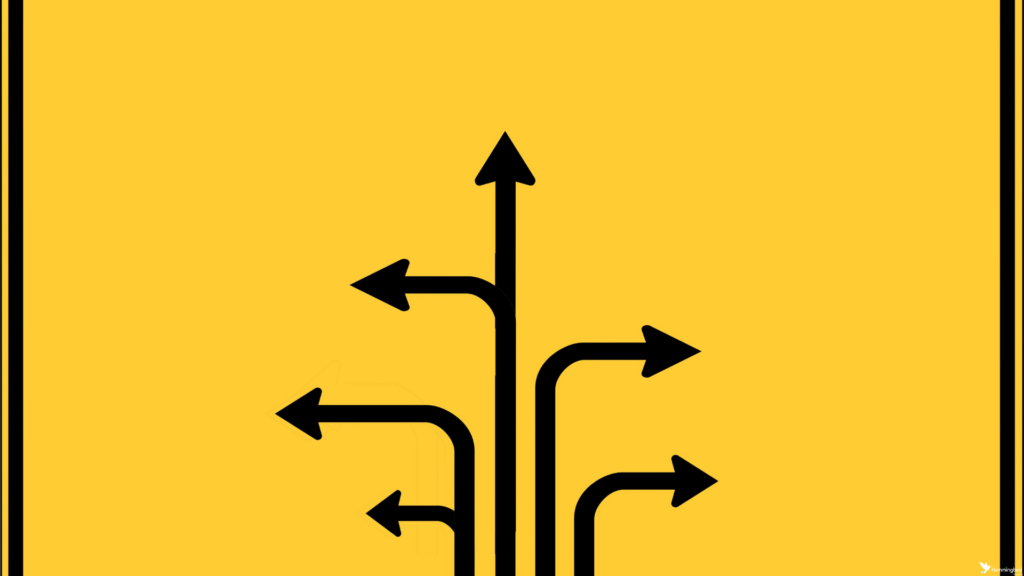
In consumer healthcare, the shift is even more pronounced. Here, entry points are defined by more than just shelves or pharmacies. They are also defined by how easily people can find and navigate solutions on-line. And brands like Numan, Manual, and Vitl are all built around this approach.
People search for symptoms, they ask questions and look for reassurance. They come across brands through content, search results, and social platforms, often before they’ve clearly defined what they actually need.
The brands that succeed in this space are the ones that meet people in that moment. Not just with a product, but with clarity, relevance, and ease.
The New Landscape
Across all of these categories, the same pattern is emerging.
Challenger brands aren’t winning by simply doing the category better. They’re winning by rethinking how people discover, understand, and choose. Because that journey and experience has fundamentally changed.
People no longer follow predictable paths. They encounter brands earlier, in different contexts, and often before intent to buy is fully formed. They move between inspiration, validation, and purchase in ways that are far less structured than traditional models suggest.

As a result, categories built solely around fixed entry points no longer reflect how people actually navigate a category. There’s a mismatch in understanding and therefore in actions.
For established brands, the risk comes from continuing to optimise for the old model. The focus on familiar channels, formats, and outdated measures of success. If discovery is happening elsewhere, decisions are being shaped differently. So those ‘optimisations’ may be irrelevant, or they are certainly missing the mark.
The more useful question isn’t ‘how does our category work?’ It’s ‘how do people actually find, understand, and choose brands like ours today?’ Because understanding that is where the advantage now sits.
Challenge Assumptions. Talk to Hummingbird Insights